
Straight Drop Awnings for Verandahs and Balconies: Fabric Choices, Hood Options, and Operation Types for Central Coast & Hornsby Homes
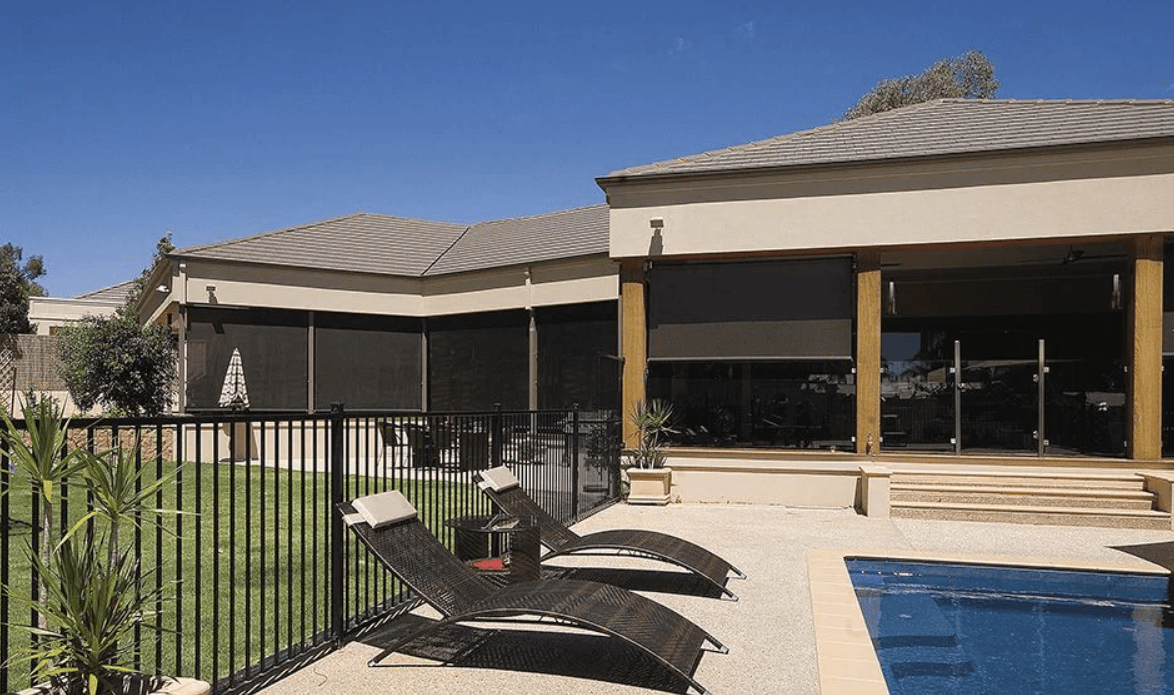 "Straight Drop Awnings for Verandahs and Balconies: Fabric Choices, Hood Options, and Operation Types for Central Coast & Hornsby Homes")
What Are Straight Drop Awnings, and How Does A Straight Drop System Roll And Open?
Straight drop awnings are a traditional style of awning that works very similar to an internal blind, except it uses fabric and hardware designed for outdoor use. The straight drop system lets the fabric roll down from the top, creating shade and privacy when you need it. When you want the opening to feel open again, you roll it back up.
This approach is suitable for a variety of spaces because it can be custom made to fit your exact area. It is commonly used on verandahs and balconies, and it is also an entry level solution for external residential comfort when side channels or a framed enclosure are not suitable or feel too costly. In everyday use, you drop the fabric to the height you need, then secure the bottom so it stays steady.
Why Are Straight Drop And Drop Awnings Popular For Outdoor Areas, Undercover Areas, And Outdoor Cafés?
Straight drop and drop awnings are popular because they add flexible shade while keeping airflow. They can be connected vertical from the top roll or connected at an angle for the sun, which helps when afternoon light comes in low and strong. They also suit undercover areas where you already have a roof but still need side cover for comfort and privacy.
They can also work for outdoor cafés where a simple screen improves comfort without turning the space into a closed room.
Common ways people use straight drop awnings include:
Shading verandahs and balconies for comfort, shade, and privacy
Reducing glare and heat around windows, including sliding windows
Adding cover to doorways undercover areas so entry points feel more protected
Using them across external shade applications and external applications where fixed walls are not wanted
Keeping outdoor areas more usable while still letting air move through
Which Fabric Choices Suit External Shade Applications For Straight Drop Awnings?
Fabric is what you live with every day, so it helps to choose based on shade, privacy, and how the space feels. The Premier Shades website lists four fabric types for straight drop awnings: Acrylic, Mesh, PVC, and Canvas. Each can suit a variety of external uses, but they behave differently in light and weather.
Acrylic fabric is often chosen when you want dependable shade and a softer finish that suits a home setting. Mesh fabric is popular when you want shade while still keeping some view and airflow, which can feel better in warm outdoor areas. PVC fabric is commonly used when you want stronger screening and a more solid barrier for privacy. Canvas is a classic option that can suit different home styles and deliver reliable shade.
If you are planning an entire suite of shade across a range of openings, many homeowners keep the fabric consistent, then adjust only where extra privacy is needed.
Should You Add A Hood To Protect The Roll, Fabric, And Awning?
Straight drop awnings can be made with or without a hood. A hood is the cover at the top that helps protect the rolled fabric and top area from weather exposure. If the awning is mounted where rain, debris, and sun can hit the roll, a hood can be a practical protective option.
If the awning is installed in more undercover positions, you may be comfortable without a hood. The main decision is whether you want extra protection and a cleaner finish at the top of the awning.
What Operation Types Are Available For Straight Drop Awnings?
The Premier Shades website lists three operation types for straight drop verandah awnings: spring loaded, crank handle operated, and rope and reel operated. These are designed to be easy and simple to use, and many households choose based on the feel of daily operation, whether they prefer manual control here or a motor preference in other external shade applications.
Spring loaded operation uses a tube with a spring inside, and the blind retracts up when not in use. You pull it down by hand, then secure it at the bottom. Crank handle operation is not spring loaded. You roll the awning up and down with a crank and handle, and the handle can be removed once set. One practical benefit is that a single handle can be used across multiple awnings.
Rope and reel operation, also called cord and reel, works by pulling the rope to the height you want and tying it off on a cleat attached to a nearby post or window frame. This can be suitable when the awning is a stretch to reach because the rope can be long enough to operate comfortably.
How Do Bottom Fixing Options Use Straps, Clips, A Lock, And A Latch For Tension?
Bottom fixing keeps the fabric stable when the straight drop is down and helps manage tension. The Premier Shades website lists specific fixing choices, depending on floor level, slope, and whether you are fixing to the floor or to a balustrade or railing.
For crank handle operation, double dog clips are the standard fixing and are suitable for level floors only. For spring-loaded operation, a strap adaptor with single dog clip is the standard fixing, best when the blind goes straight to ground or floor with a set fixing point. A strap adaptor option with bungy strap and saddle hook is also available.
For railings and balustrades, breeching staple options are available. These include a breeching staple with cam lock strap or buckle and single dog clips, which can attach to balustrades or railings, or to the floor with another mounted stainless steel saddle handle, and it can adjust clearance to the floor. There is also a breeching staple with cam lock strap or buckle and no dog clip option, designed for sloping floors and for adjusting clearance to the floor.
A flush mount plate, described as a cellar lift, can be mounted flat in the floor so dog clips can hook on when in use. When not in use it sits flush with the floor and is ideal for walkways. If your balcony has wire balustrades or nearby cables, plan fixing locations so straps and clips do not snag and the system stays easy to use.
What Should You Plan For Installation, Size, And External Residential Use?
Installation should start with size, because the Premier Shades website lists maximum limits for straight drop awnings. The listed maximum sizes are 4600 mm width by 2800 mm drop, or 3800 mm width by 3600 mm drop. These limits help you decide whether one awning can cover the opening or whether you should split a longer span.
The website also notes that straight drop awnings can be connected vertical from the top roll or connected at an angle for the sun, and they can stop at the banister or railing or go right to the floor. Those choices affect privacy, shade, and how well the awning protects the space.
A simple planning checklist is:
Confirm width and drop against the maximum size limits
Decide vertical or angled straight drop based on sun direction
Choose whether the awning stops at a railing or goes to the floor
Pick an operation type that suits daily use
Match the bottom fixing to level floors, sloping floors, or railings
If you are fitting more than one awning, it can help to think modular. Across a suite of awnings, you can often utilise common components and common components related decisions, like consistent fabric and matching fixing styles, while still choosing options that suit each location.
Final Thoughts
Straight drop awnings are popular because they make outdoor areas more usable without making them feel closed off. They are suitable for a variety of external shade applications because you can choose fabric, decide on a hood or no hood, and select an operation style that fits your routine.
With fabric options including Acrylic, Mesh, PVC, and Canvas, you can tune how much shade and privacy you get. With clear bottom fixing options using straps, clips, and cam lock strap choices, you can keep the awning stable and maintain good tension, even on balconies with sloping floors. When installation is planned around the right size and the straight drop system is matched to your space, it becomes a simple, everyday upgrade for your home.
Explore the straight drop awnings range and request a quote on the Premier Shades website.
Works Cited
“Straight Drop Verandah Awnings - Central Coast & Hornsby.” Premier Shades, https://www.premiershades.com.au/straight-drop-awnings.html. Accessed 19 Feb. 2026.
“Awnings.” Premier Shades, https://www.premiershades.com.au/awnings.html. Accessed 19 Feb. 2026.
“Shading.” YourHome, Australian Government, https://www.yourhome.gov.au/passive-design/shading. Accessed 19 Feb. 2026.
“Sun Protection Advice.” Australian Government, https://www.health.gov.au/resources/publications/sun-protection-advice. Accessed 19 Feb. 2026.
Frequently Asked Questions:
What Are Straight Drop Awnings Best Used For On Verandahs And Balconies?
Straight drop awnings are best for adding flexible shade and privacy to outdoor areas like verandahs, balconies, and undercover areas, while still allowing airflow and keeping the space feeling open.
Which Fabric Type Should I Choose For Straight Drop Awnings?
If you want airflow and some view, mesh fabric is often suitable. If you want a more solid privacy screen, PVC can be suitable. Acrylic and canvas are also suitable options for dependable shade and a finish that suits many homes.
Do Straight Drop Awnings Come With A Hood, And Do I Need One?
Straight drop awnings can be made with or without a hood. A hood can help protect the rolled fabric and top area from weather exposure, especially if the awning is mounted in a more exposed position.
What Are The Main Operation Options For Straight Drop Awnings?
The main operation types are spring loaded, crank handle operated, and rope and reel operated. The right choice depends on how often you will open and close the awning and what feels easiest for daily use.
How Are Straight Drop Awnings Secured At The Bottom For Tension And Stability?
They are secured using bottom fixing options such as dog clips, strap adaptors, bungy strap and saddle hook options, breeching staple options for railings, and flush mount plates for walkways. The best fixing depends on whether the floor is level or sloping and whether the awning is fixing to the floor or a balustrade or railing.
| Tags:Awnings |